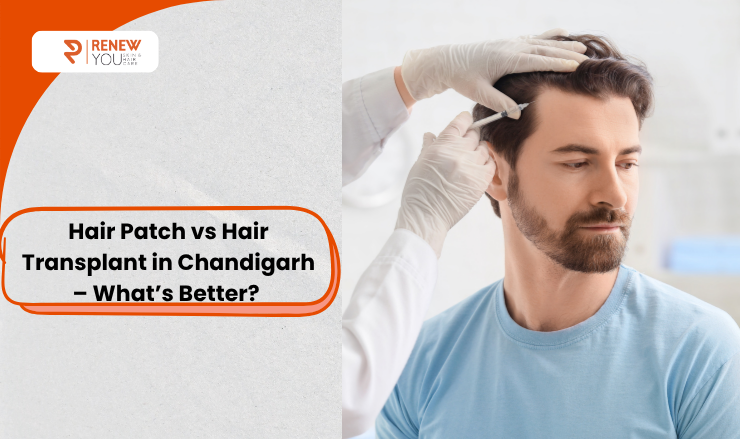
Hair loss is something most of us don’t talk about openly, but it quietly affects millions of people every single day. You wake up one morning, look in the mirror, and notice your hairline has shifted a little further back. Or maybe you’ve been watching your hair thin out slowly for years. Whatever the case, it hits differently than a regular health issue — because hair is tied to how you see yourself.
If you live in Chandigarh, Mohali, or Panchkula, you’ve probably come across two main options: a hair patch or a hair transplant. Both are popular. Both work. But they work very differently, and choosing the wrong one can leave you frustrated.
Let’s talk about both honestly — no complicated terms, no pressure. Just a clear, human explanation to help you decide what’s right for you.
First, Why Are You Losing Hair?
Before jumping into solutions like a hair patch or hair transplant, it’s important to pause and truly understand why hair loss is happening in the first place. Many people make the mistake of rushing into treatments without identifying the root cause—and that often leads to disappointment later.
Hair loss is not caused by just one factor. In reality, it’s usually a combination of multiple reasons working together. One of the most common causes is genetics, often referred to as hereditary hair loss. If hair thinning or baldness runs in your family, there’s a strong chance you may experience it too at some stage in life.
But genetics isn’t the only reason. Modern lifestyles play a big role as well. Stress, for example, has become a major trigger for hair fall. Long working hours, lack of sleep, and mental pressure can push hair follicles into a resting phase, leading to noticeable shedding. Similarly, hormonal imbalances—especially in conditions like thyroid disorders or hormonal shifts—can disrupt the natural hair growth cycle.
Your daily habits matter more than you might think. A poor diet, lacking essential nutrients like protein, iron, and vitamins, can weaken hair from the roots. Over time, this makes hair thinner, more fragile, and prone to falling out. In some cases, medical conditions or medications can also contribute to sudden or excessive hair loss.
What makes things more confusing is that hair loss doesn’t look the same for everyone. Some people experience a slow and gradual thinning over years, barely noticing it until it becomes significant. Others may face sudden hair fall, where large amounts of hair shed within a short period. The pattern, speed, and severity can vary widely from person to person.
What is a Hair Patch?
A hair patch, also known as a hair system, is a simple and non-surgical way to cover bald or thinning areas of the scalp. It is a custom-made piece designed to match your natural hair in terms of color, texture, and density, so it blends seamlessly with your existing hair. The patch is fixed onto the scalp using clips, adhesive tapes, or skin-friendly glue, allowing you to achieve a natural-looking appearance almost instantly.
What’s Good About It
One of the biggest advantages of a hair patch is how quickly it works. There’s no surgery involved, no pain, and no recovery time. In just a few hours, you can completely transform your look and regain the appearance of fuller hair. It’s also relatively budget-friendly in the beginning, making it a good option for those who want immediate results or are not ready to undergo a surgical procedure.
What’s Not So Great
However, a hair patch does come with ongoing responsibilities. It requires regular maintenance, including cleaning, reattachment, and eventual replacement as it wears out over time. This means continuous effort and additional costs in the long run. Also, it’s important to understand that a hair patch does not treat or stop hair loss—it simply covers it. While it improves your appearance, the underlying hair loss condition remains unchanged.
What is a Hair Transplant?
A hair transplant is a medically advanced solution for hair loss where your own healthy hair follicles are carefully taken from one part of the scalp—usually the back or sides—and implanted into areas where hair is thinning or completely lost. Since the procedure uses your natural hair, the results blend seamlessly with your existing hair over time.
Today, the most widely used technique is FUE (Follicular Unit Extraction), which is minimally invasive, does not involve major cuts or stitches, and leaves almost no visible scars. This makes the procedure safer, more comfortable, and suitable for people who prefer a quicker recovery.
What’s Good About It
One of the biggest advantages of a hair transplant is that it offers a permanent solution. The transplanted hair continues to grow naturally, just like the rest of your hair. Once the healing phase is complete, you can wash, cut, and style it without any special restrictions.
Another benefit is the low maintenance. Unlike temporary solutions, you don’t need regular replacements or adjustments. Over time, it becomes a one-time investment that gives long-lasting and natural-looking results.
What’s Not So Great
Since it is a surgical procedure, a hair transplant does require some downtime for recovery, usually a few days to a week. You also need to be patient, as the results are not immediate—new hair growth typically becomes noticeable after 3 to 6 months.
Additionally, not everyone is an ideal candidate. The success of the procedure depends on having a healthy donor area with enough hair to transplant.
Side-by-Side Comparison
Let’s simplify the difference:
- Speed: Hair patch gives instant results. Hair transplant takes time.
- Permanence: Hair patch is temporary. Hair transplant is permanent.
- Maintenance: The hair patch needs regular upkeep. Hair transplant requires minimal care after healing.
- Cost Over Time: Hair patch seems cheaper initially but adds up over time. Hair transplant costs more upfront but lasts for years.
- Natural Feel: Hair transplant feels completely natural. Hair patch looks natural but is still external.
Renew You – Personalized Hair Solutions in Chandigarh
When it comes to deciding between a hair patch and a hair transplant, having the right expert guidance can make a huge difference in your final results. That’s exactly where Renew You stands apart.
At Renew You, the approach goes beyond simply offering treatments. The team focuses on understanding your hair condition, lifestyle, and expectations before suggesting any solution. Instead of a one-size-fits-all method, every recommendation is tailored to what will genuinely work best for you.
What Makes Us Different?
- Personalized consultations: Every client receives a detailed assessment to determine the most suitable solution based on their unique hair loss pattern.
- Advanced techniques: Whether it’s a non-surgical hair patch or a permanent hair transplant, modern and safe methods are used for effective results.
- Natural-looking outcomes: The goal is to create a look that blends seamlessly with your natural features, enhancing your overall appearance.
- Honest guidance: You get clear, transparent advice without any pressure or unnecessary treatments.
Whether you’re in the early stages of hair thinning or considering a complete transformation, Renew You ensures you move forward with the right solution—confidently and with complete clarity.
Final Thoughts
If you’re feeling unsure about whether to choose a hair patch or a hair transplant, think of it in a simple, practical way. A hair patch is ideal if you want a quick transformation without surgery—it’s flexible, gives instant results, and works well if you’re looking for a temporary or non-invasive option. On the other hand, a hair transplant is a more permanent solution that focuses on restoring your natural hair growth, offering long-term results with minimal maintenance once the process is complete.
Both options are effective in their own ways, and neither is universally “better” than the other. The right choice depends on your lifestyle, your comfort with medical procedures, your budget, and what kind of results you expect—whether that’s immediate change or long-lasting growth.
It’s always a good idea to take your time, understand both options properly, and speak with experienced professionals before making a decision. Because in the end, this isn’t just about improving your appearance—it’s about regaining your confidence and feeling comfortable in your own skin again.