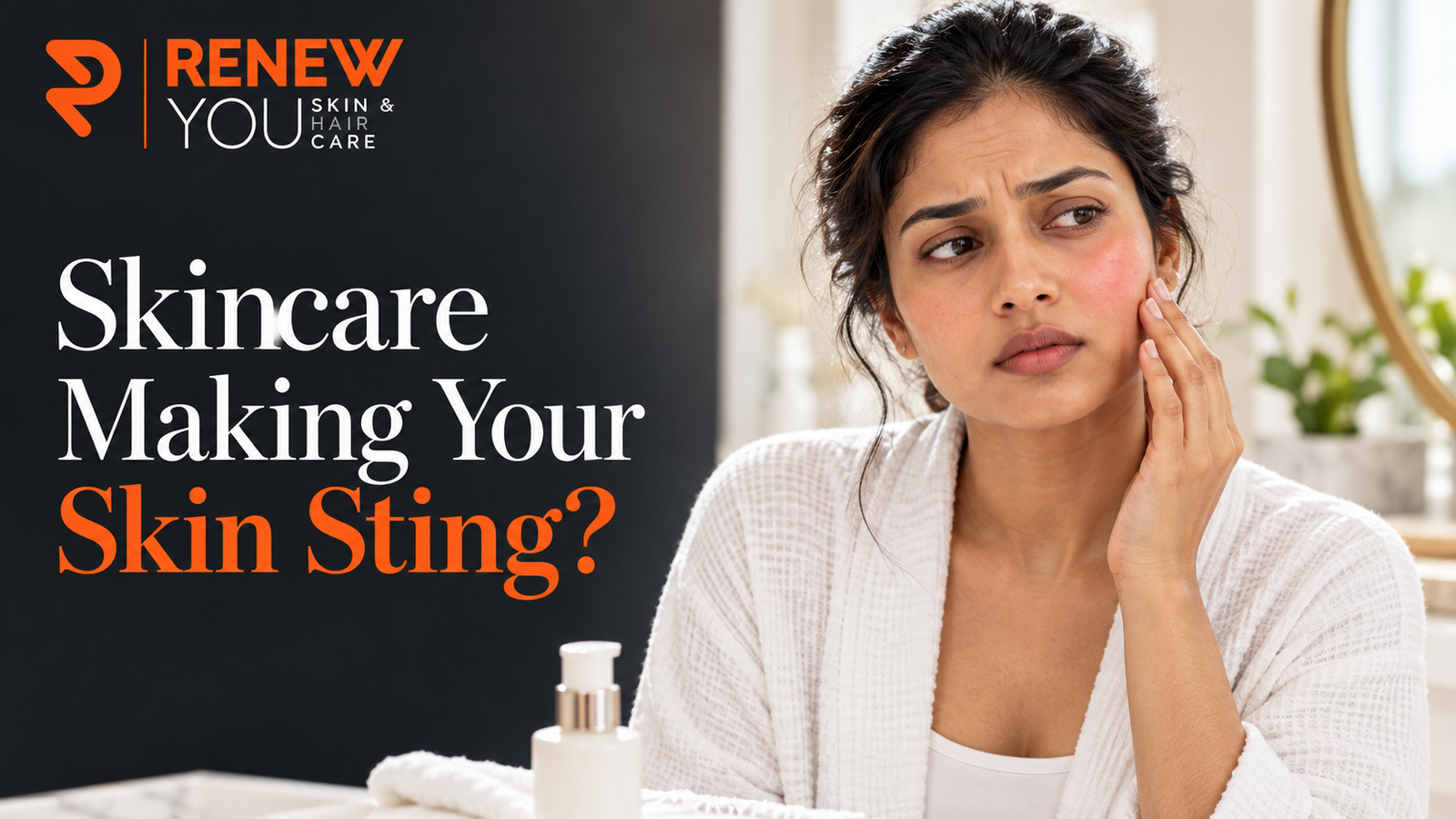
You apply a serum or moisturiser expecting comfort, but your cheeks suddenly start stinging. Skin burning after skincare can be confusing, especially when a product promises to be gentle or suitable for sensitive skin.
If you are looking for a skin specialist in Mohali, describing when the burning starts and what you have applied can help guide an assessment. Persistent discomfort should not be treated as proof that a product is working.
Why Can Skincare Products Cause Burning?
Ingredients such as retinoids and exfoliating acids can irritate skin, particularly when used too frequently or combined with other strong products. Scrubbing, over-exfoliation and harsh cleansing can add to the problem.
Fragrances or preservatives may also trigger a reaction in some people. Even products labelled “natural” can cause skincare irritation. Using a larger amount does not necessarily deliver better results.
A brief sensation and persistent burning are not the same thing. Repeated stinging, increasing pain or visible inflammation deserves attention rather than an attempt to push through it.
Could Your Skin Barrier Be Irritated?
The outer layer of your skin helps retain moisture and protect against irritants. When this barrier is disrupted, skin may feel dry, tight, flaky or more sensitive to products.
A damaged skin barrier can follow repeated exposure to irritating products or excessive washing. However, burning alone cannot confirm barrier damage. An allergy, eczema or another skin condition may also be involved.
Sensitive skin care should focus on tolerable products and a manageable routine. Adding several “repair” serums at once may make it harder to identify what is helping or causing discomfort.
Irritation or Allergy: Why the Difference Matters
Irritant contact dermatitis happens when a substance directly irritates or damages the skin. It may follow one strong exposure or repeated use of products your skin cannot tolerate.
Allergic contact dermatitis involves an immune reaction to a particular ingredient. It can develop hours or days after exposure, and a product used previously without trouble can still become a trigger.
Both reactions can cause redness, itching, burning or swelling, so appearance alone may not distinguish them. Identifying an allergen may require professional patch testing. Reapplying a suspect product to inflamed skin is not a reliable home diagnostic test.
What Should You Do When a Product Burns?
For a suspected reaction to an ordinary skincare product:
- Stop applying it and gently rinse it off with lukewarm water.
- Pat dry without rubbing or scrubbing.
- Use a cool, damp compress for comfort; avoid direct ice.
- Pause exfoliants, retinoids and other irritating cosmetic products.
- If tolerated, use a simple fragrance-free moisturiser you already know suits you.
Avoid trying to “neutralise” the reaction with lemon juice, baking soda or another strong product. Keep the packaging or ingredient list for your appointment.
If a prescribed skin medicine repeatedly irritates you, contact the prescriber for advice about adjusting the plan. Do not book a peel, laser or rejuvenation procedure while your skin is actively irritated.
When to Consult a Skin Specialist
Arrange a skin consultation if burning persists, repeatedly returns, or is accompanied by a rash. A clinician can review your routine, examine your skin and decide whether treatment or allergy testing is appropriate.
Seek prompt medical care for significant swelling, blistering, severe pain, rapidly worsening symptoms or signs of infection.
Breathing difficulty, throat tightness, sudden swelling of the lips or tongue, or faintness requires emergency medical help immediately. Do not wait for a routine appointment.
Once symptoms settle, discuss how to reintroduce products gradually. The aim is a routine you can tolerate, rather than repeatedly treating avoidable reactions.
Frequently Asked Questions
Does burning mean a skincare product is working?
No. Persistent burning is not evidence of effectiveness. It can indicate irritation or a reaction that needs attention.
Should you keep using a product that repeatedly stings?
No. Pause the suspect cosmetic product and seek advice, especially if redness or discomfort persists. Ask your prescriber before changing a prescribed treatment plan.
Readers from Panchkula, Shimla, Solan, Mohali and Chandigarh can contact Renew You for personalised guidance on their skincare concerns.