
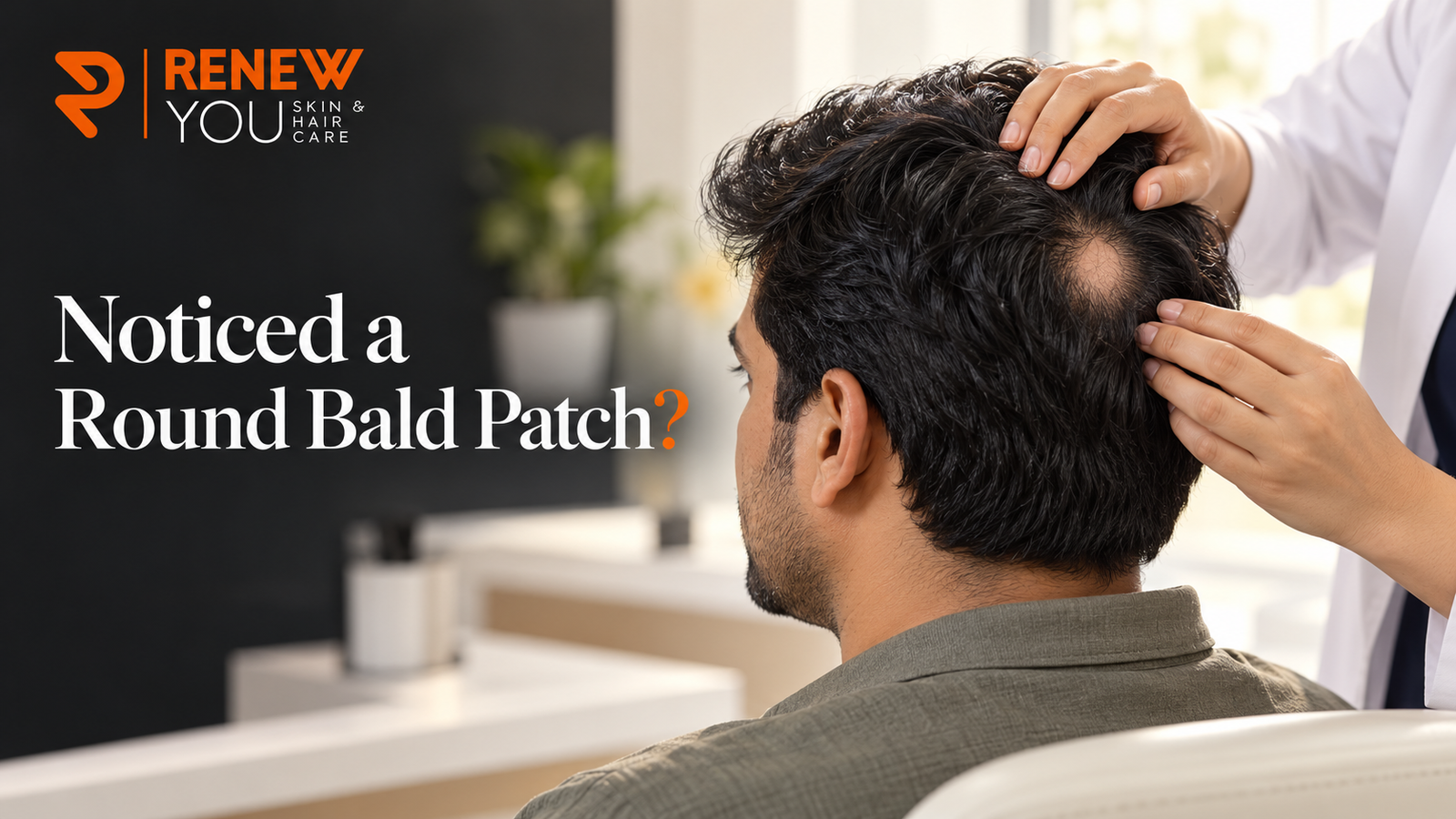
You might notice a small bare area while combing your hair, or your barber may point it out during a haircut. Finding round bald patches on scalp areas can be worrying, especially when the surrounding hair looks normal.
If you are looking for alopecia treatment in Chandigarh, begin with a proper hair loss assessment. The shape of a patch is a useful clue, but it cannot confirm the cause. Several conditions can produce patchy hair loss, and their treatment needs differ.
What Can Cause Round Bald Patches?
Alopecia areata is one possible cause. It often produces a round or oval patch where the skin looks smooth. However, a bald patch does not automatically mean this condition.
Scalp fungal infections, such as tinea capitis, can cause patches with scaling, itching and broken hairs. Repeated pulling, tight hairstyles or habits involving hair pulling may also cause localised hair loss. Other inflammatory scalp conditions sometimes damage follicles.
Tell your clinician whether the patch appeared suddenly, is getting larger, or comes with discomfort. These details help distinguish between possible causes rather than relying on photographs alone.
What Is Alopecia Areata?
Alopecia areata is an autoimmune condition. This means the immune system mistakenly attacks hair follicles, interrupting normal hair growth. It can affect people of different ages and may involve the scalp, beard, eyebrows or other areas.
It is not contagious and is not caused by poor hygiene. A smooth patch without obvious swelling or scaling is a common presentation, although some people notice itching or tingling.
Hair can regrow, sometimes without treatment, but the course is unpredictable. Patches may remain stable, enlarge, or return after regrowth. No one can promise a fixed recovery date simply by looking at the patch.
Why a Scalp Examination Matters
During a consultation, the clinician can examine the patch, nearby hairs and the rest of your scalp. They may also ask about nail changes, other symptoms, family history and previous episodes.
A magnifying instrument called a dermatoscope can provide a closer view. If an infection or another diagnosis is suspected, selected tests may help. Not everyone needs blood tests or a biopsy.
Accompanying itching, redness, scaling, crusting or broken hairs can change the assessment. These findings should not be dismissed as ordinary dandruff. A smooth patch and an inflamed, scaly patch may need very different management.
How Is Treatment Chosen?
Suitable alopecia treatment depends on the confirmed diagnosis, your age, the extent of hair loss and how long it has been present.
For some limited cases of alopecia areata, monitored observation may be appropriate. Other cases may need prescribed topical treatments, local injections or medicines that act more widely. The choice requires discussion of potential benefits, side effects and follow-up.
A fungal scalp infection needs antifungal treatment, not the same plan used for alopecia areata. Hair transplantation is not a routine solution for alopecia areata. Oils, supplements and cosmetic products cannot reliably treat every cause of a bald patch.
Regrowth varies, and follow-up helps assess progress and whether the plan needs changing.
When Should You Seek Help?
Arrange an assessment when you notice a new patch, especially if it grows, additional patches appear, or your eyebrows or beard are affected.
Seek prompt medical advice for pain, swelling, pus, fever or marked scalp inflammation. A child with a scaly bald patch should also be assessed rather than treated only with cosmetic products.
While waiting, handle your hair gently and avoid tight styles or harsh chemical treatments. Protect exposed scalp from sunlight with suitable headwear. If hair loss is affecting your confidence, mention this during the consultation too.
Frequently Asked Questions
Does a round bald patch always mean alopecia areata?
No. Scalp infections, pulling-related damage and other conditions can also cause patches. Examination helps establish the diagnosis.
Can hair grow back in a bald patch?
Yes, regrowth is possible in many cases, but it depends on the cause and follicle health. Some conditions recur, and results cannot be guaranteed.
Readers from Panchkula, Shimla, Solan, Mohali and Chandigarh can contact Renew You to arrange a scalp assessment and discuss appropriate next steps.