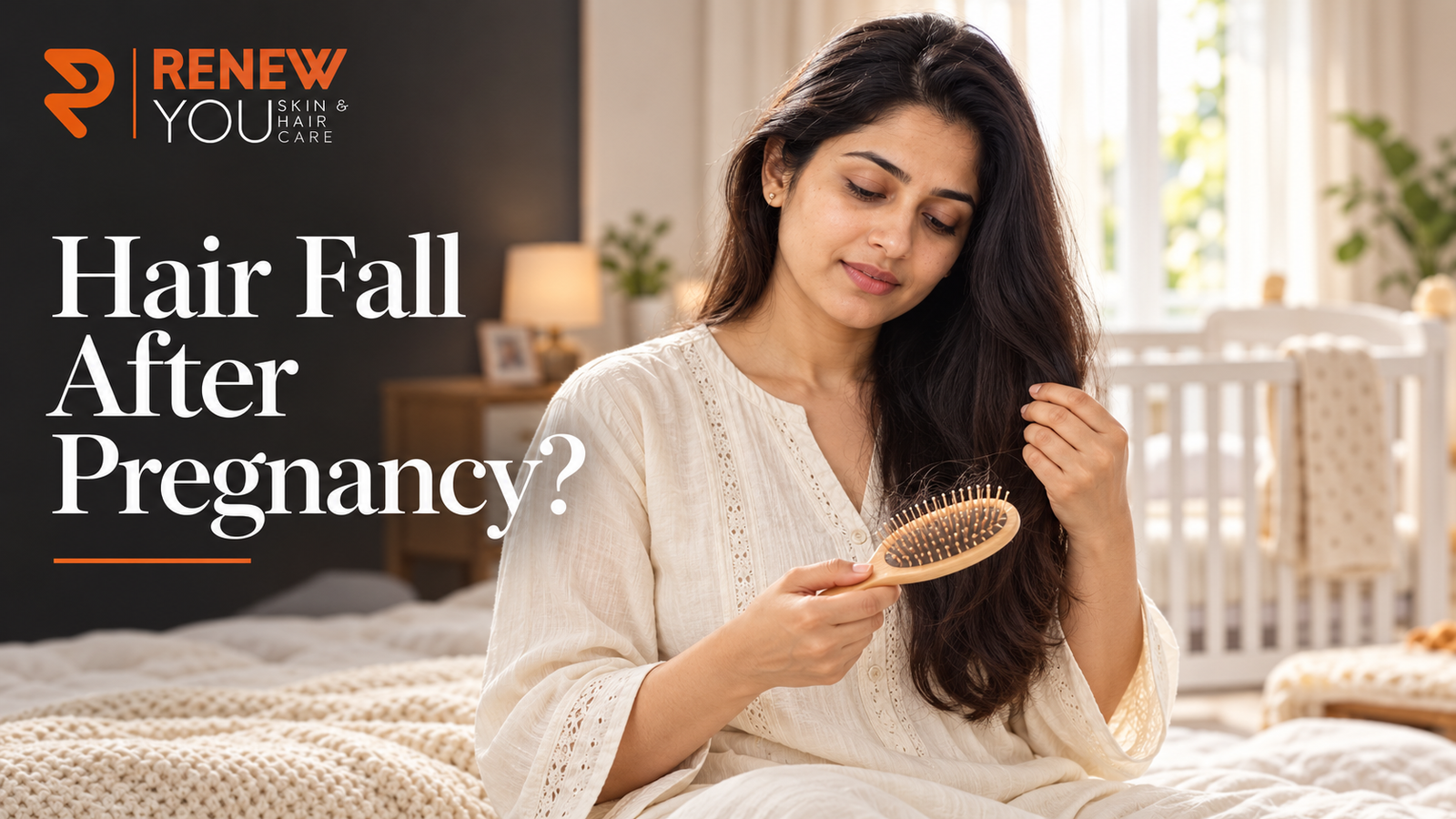
Noticing more hair on your brush or in the shower after childbirth can feel unsettling. With so much attention on your baby, changes in your own appearance may bring unexpected worry. Postpartum hair fall is common, and it usually reflects a temporary change in the hair growth cycle.
If you are considering hair fall treatment in Solan, a professional assessment can help clarify what is happening. Understanding the pattern and timing of shedding is more useful than choosing a product promising quick regrowth.
Why Does Hair Fall Happen After Pregnancy?
During pregnancy, hormonal changes can keep more hairs in their growing phase. After delivery, falling oestrogen levels allow more strands to move into the resting phase and eventually shed.
This increased shedding is called telogen effluvium. It often affects hair across the scalp rather than creating one clearly defined bald patch. Although it can look dramatic, it does not automatically mean the hair follicles are permanently damaged.
Hair fall after pregnancy is not a sign that you have failed to care for yourself. However, other causes can coexist, so unusual or persistent changes should be assessed.
When Can Shedding Start, and How Long Can It Last?
Postpartum hair shedding commonly becomes noticeable a few months after birth and often peaks around the fourth month. The delay can make it seem unrelated to pregnancy.
Shedding generally settles as the growth cycle readjusts, but regaining visible fullness takes longer. Many women see their hair return towards its previous fullness by their baby’s first birthday, sometimes earlier.
These are typical patterns, not guaranteed deadlines. Recovery varies, and continuing stress, illness or an additional cause of hair loss may influence the timeline. If your hair has not regained fullness after a year, arrange an assessment rather than assuming you simply need more time.
Gentle Ways to Care for Your Hair
Haircare after childbirth should be simple enough to manage around your routine:
- Use a gentle shampoo and conditioner suited to your hair.
- Detangle carefully without pulling at knots.
- Wrap wet hair in a towel instead of rubbing vigorously.
- Reduce hot styling tools and repeated chemical processing.
- Choose loose hairstyles rather than tight buns or ponytails.
These steps can reduce additional breakage, but they cannot instantly stop hormonally triggered shedding. A shorter haircut may make maintenance easier without changing the underlying growth cycle.
Eat regular, balanced meals with protein sources, iron-containing foods, fruit and vegetables. Ask for support if caring for your baby makes meals difficult. Do not start high-dose hair supplements without an identified need or professional advice.
When Is a Professional Check-Up Needed?
Seek advice sooner if you notice bald patches, scalp redness, scaling, pain or rapidly worsening thinning. Do not feel you must wait a full year when symptoms concern you.
Persistent shedding or symptoms such as unusual fatigue, dizziness or unexplained weight changes may need assessment for additional causes. Depending on your history, a doctor may consider iron deficiency, thyroid problems or another hair loss condition. Tests should be chosen according to the assessment.
If you are breastfeeding, tell your clinician before discussing medicines or supplements. Treatment choices should account for you and your baby; avoid starting hair-growth products independently.
Hair and Scalp Assessment at Renew You
A consultation can review when shedding began, your recovery after delivery, current medicines, nutrition and styling habits. Examining your scalp helps distinguish temporary shedding from other concerns.
Suitable hair fall treatment depends on the cause. Uncomplicated postpartum shedding often improves without medical treatment. Hair transplants or cosmetic procedures are not routine solutions for this temporary change.
Frequently Asked Questions
Is hair fall after pregnancy always permanent?
No. Typical postpartum shedding is temporary. Persistent thinning or a different pattern may suggest another cause requiring assessment.
Should you take hair supplements while breastfeeding?
Not automatically. Hair shedding alone does not prove a deficiency. Discuss your nutritional needs and any existing postnatal supplements with your clinician before adding products.
Readers from Panchkula, Shimla, Solan, Mohali and Chandigarh can contact Renew You for a hair and scalp consultation. Get reassurance and advice suited to your recovery.