
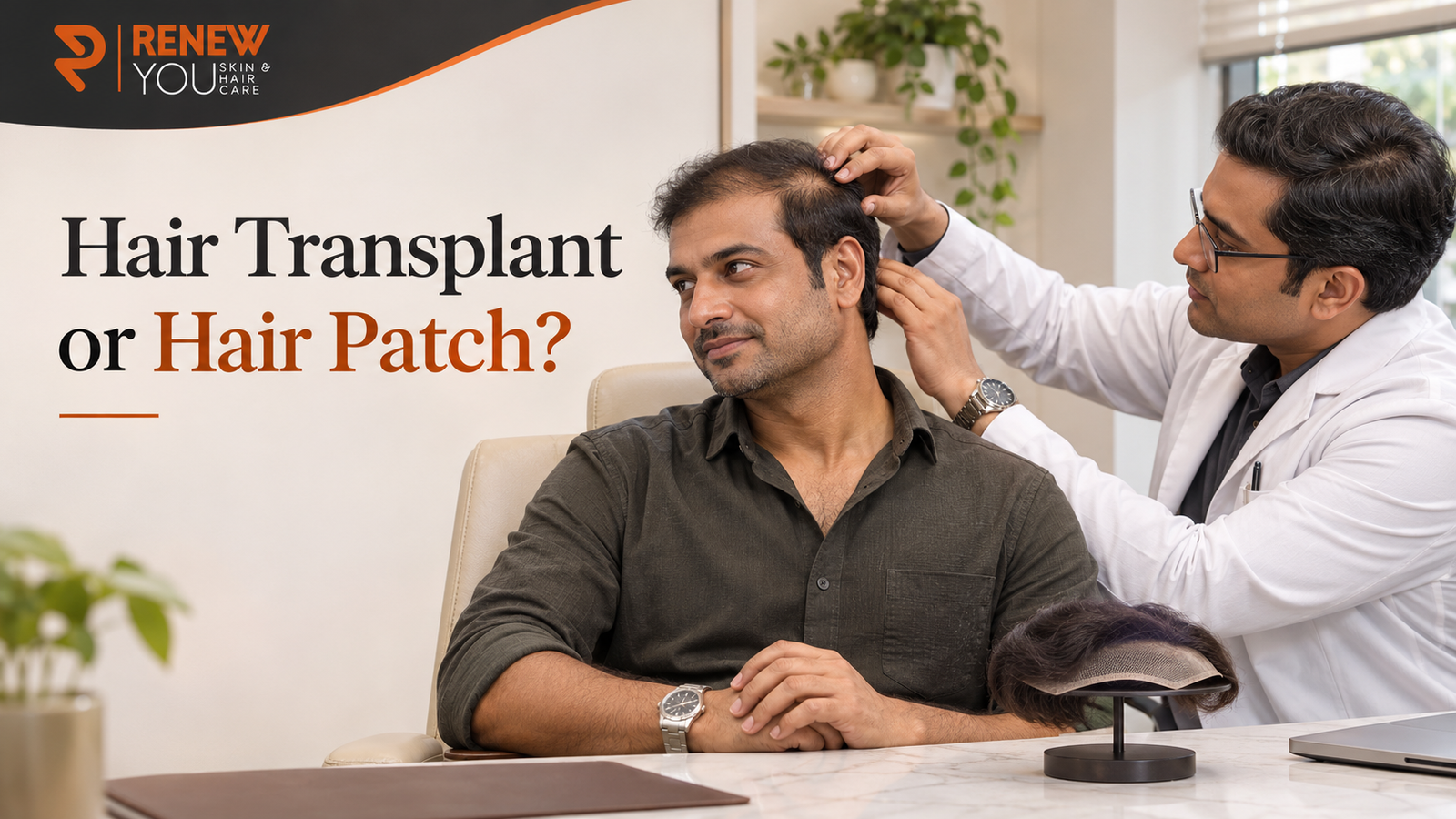
When thinning becomes noticeable, the number of advertised solutions can feel overwhelming. Comparing a hair transplant vs hair patch starts with understanding that they work differently. One moves your own follicles through surgery; the other covers thinning areas with a hair system. If you are exploring hair restoration in Panchkula, an assessment of the cause and extent of hair loss helps you compare options against your preferences, daily routine and expectations.
How Does a Hair Transplant Work?
A transplant moves healthy follicles from a donor area, often the back or sides of the scalp, into areas with less hair. It redistributes existing follicles rather than creating an unlimited supply. The amount of healthy donor hair and the pattern of loss help determine whether suitable coverage is possible.
Transplantation may suit selected people with established pattern hair loss. It is not the routine answer for every type of shedding or patchy loss. Recovery takes time, visible growth develops gradually over months, and existing non-transplanted hair may continue to thin. Discuss ongoing care before deciding on surgery.
What Does a Hair Patch Do?
A hair patch is a hairpiece designed to blend with surrounding hair and cover an area of thinning. Depending on the system, attachment may involve tapes, adhesives or clips. It can provide visible coverage once fitted, without waiting for transplanted follicles to grow.
A patch does not treat the underlying cause or stimulate regrowth. It needs cleaning, maintenance and eventual replacement. Ask how it is removed, how your scalp is cared for and which attachment suits you. Some people develop irritation from adhesives or friction, so discomfort should be reviewed rather than ignored.
Comparing the Practical Differences
Neither option guarantees an identical result for everyone. For transplantation, ask about realistic density and future loss. For a patch, ask how it feels during exercise, washing and sleep. The answers depend on the system, your scalp and the care routine, rather than a general promise that it needs no maintenance.
What Should Guide Your Decision?
First understand why hair is thinning. Sudden shedding, scalp inflammation or an active patchy condition may need medical care before planning restoration. A clinician can assess the scalp, donor supply and the likelihood of further loss. Not everyone needs tests, and not everyone needs a procedure.
Consider how you feel about surgery, recovery and regular maintenance. Compare the total costs of follow-up or system replacement, not just the first appointment. You may prefer a non-surgical option, wish to explore medical treatment, or decide to leave the thinning uncovered. These are all preferences worth discussing.
Explore Suitable Options at Renew You
During a hair transplant consultation, ask who performs the surgery, what donor hair is available and how the plan accounts for future thinning. Discuss potential complications, scarring and recovery restrictions. A graft count alone cannot tell you whether the result will meet your goals.
If you prefer coverage without transplant surgery, discuss hair patch and hair wigs and request an explanation of fitting and upkeep. Bring up sensitive skin, previous adhesive reactions and your usual activities. A suitable choice should be understandable and manageable in everyday life, with clear follow-up arrangements.
Frequently Asked Questions
Is a hair patch a permanent treatment for hair loss?
No. It provides coverage while worn and needs maintenance and replacement. It does not change the underlying condition or regrow hair.
Does a transplant stop all future hair loss?
No. Existing hair can continue thinning. An assessment and a long-term plan help set realistic expectations about coverage and ongoing care.
Contact Renew You for personalised hair and scalp assessment. Readers from Panchkula, Mohali, Solan, Shimla and Chandigarh can enquire about consultation options.